


Guest Article:
Decarbonisation in heavy transport is a complex challenge, and there’s no single solution.
As a valued RHINO customer, TR Group brings a practical, fleet-focused perspective to the conversation. In this guest article, they explore why reducing fleet emissions requires looking beyond any one technology and considering the range of solutions available across the transport industry.
We’re pleased to share their insights with the RHINO community.
Over to the team at TR Group…
Operators of Heavy Commercial Vehicles are increasingly looking at viable ways to reduce their emissions. From customer expectations and corporate sustainability targets to changing regulations and rising operating costs, fleet decarbonisation has become a business priority rather than a future aspiration.
However, despite the attention zero emission trucks receive, the reality is much more complex. There is no single technology that can solve every transport challenge.
At TR Group, we’ve spent years working alongside fleet operators across New Zealand and Australia to help them navigate the transition to lower-emission transport. That experience has shown us one thing above all else: successful decarbonisation starts with understanding your operation—not choosing a technology. Learn more about TR Group‘s sustainability initiatives by visiting the Sustainability Hub.
Every fleet has a different journey

The requirements of an urban delivery fleet are vastly different from those of a container transport operator, linehaul carrier or infrastructure business.
Before deciding on an energy solution, fleet operators should consider:
- Daily kilometres travelled
- Payload requirements
- Route predictability
- Depot infrastructure
- Vehicle replacement cycles
- Total cost of ownership
- Customer sustainability expectations
These factors often determine whether battery-electric vehicles, hydrogen, hybrid, renewable fuels or a combination of technologies will deliver the best long-term outcome.
The right technology for the right application

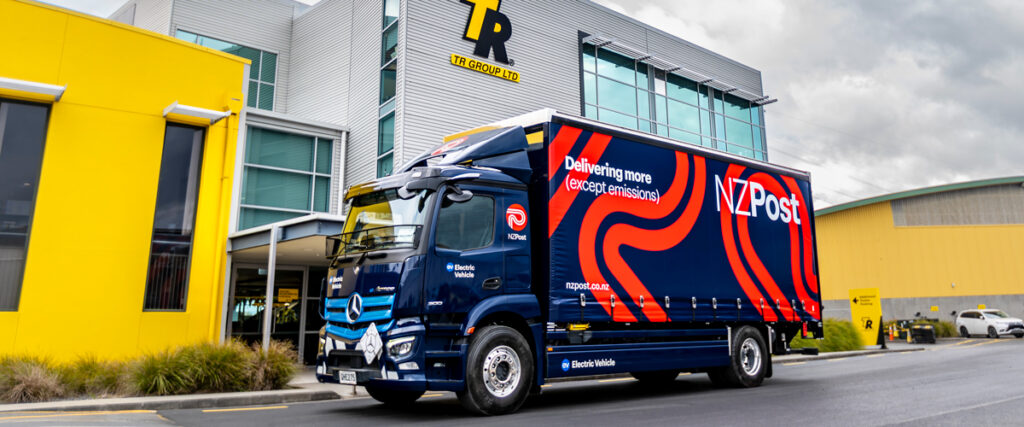
Battery-electric trucks are an excellent solution for many metropolitan operations with predictable routes and depot charging. Hydrogen fuel-cell vehicles continue to show significant potential for longer-distance applications where fast refuelling and payload capacity are critical.
Renewable fuels such as Hydrotreated Vegetable Oil (HVO) can also provide immediate emissions reductions using existing diesel vehicles, allowing operators to reduce their carbon footprint without replacing their fleet.
Beyond alternative energy sources, many businesses can achieve substantial gains through operational improvements such as:
- Better route planning
- Driver training
- Tyre pressure management
- Preventative maintenance strategies
- Effective fleet utilisation
These initiatives often deliver measurable emissions reductions while lowering operating costs.
Experience matters
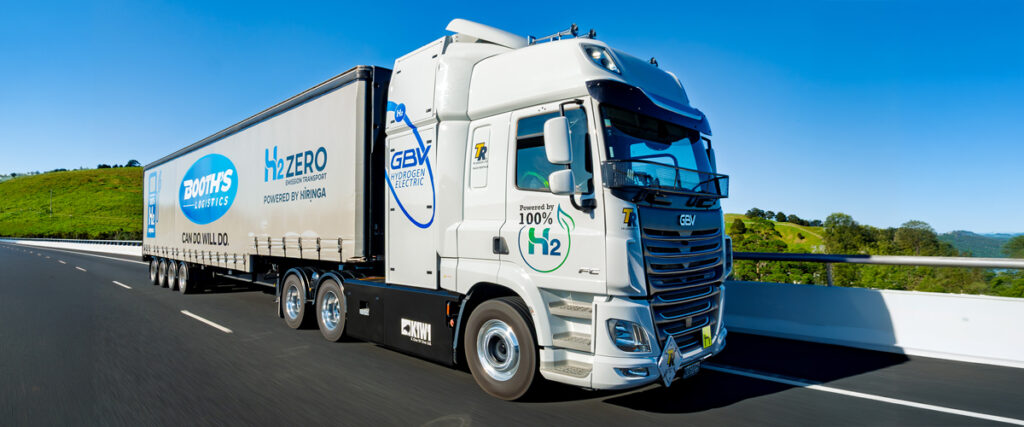
TR Group‘s approach is built on practical experience rather than theory. Through the deployment of battery-electric trucks, hydrogen fuel-cell vehicles, hydrogen dual-fuel technology and hybrid vehicles, the company has helped customers understand both the opportunities and challenges of emerging transport technologies. It has now brought this expertise together through its end-to-end fleet decarbonisation capability, supporting operators with vehicle selection, financing, infrastructure planning, charging, maintenance and ongoing operational support.
Unlike passenger vehicles, heavy transport requires careful planning around payloads, charging or refuelling infrastructure, maintenance requirements and whole-of-life operating costs. Working with experienced partners helps reduce both financial and operational risk during the transition.
Sustainability is a journey, not a destination
One of the biggest misconceptions surrounding decarbonisation is that it requires businesses to replace their entire fleet overnight.
In reality, the most successful organisations take a staged approach. They identify opportunities to reduce emissions today while preparing for future technologies as they become commercially viable.
TR Group‘s broader sustainability programme reflects this philosophy, combining zero- and low-emission vehicles with practical initiatives such as tyre retreading, tyre pressure monitoring systems, water conservation and recycling programmes that reduce environmental impact across the business. Explore TR Group Sustainability Initiatives.
The future of heavy transport won’t be defined by one technology. It will be shaped by informed decisions, practical innovation and strong partnerships that help operators choose the right solution for the right application.

SCOTT DONNELLY
New Energy & Emissions Reduction Lead at TR Group
Scott Donnelly is TR Group’s New Energy & Emissions Reduction Lead, bringing over 20 years of heavy vehicle industry experience and deep expertise in zero and low emission technologies. A qualified diesel mechanic, Scott has spent eight years at TR Group helping customers transition to battery electric, hydrogen fuel cell, and dual fuel solutions, while leading a specialist team focused on sustainable transport innovation.
Read more on Carbon, ESG and Sustainability.
Explore our Online Services.